
Sunday, December 22, 2019

UNDERSTANDING SASSIE, 25. Sassie and Mom


Understanding Sassie: A Novel of Dog and Human Communication

Sassie became Mom’s companion.  It was as if she knew how sad Mom felt with Pop gone.
Sassie began to show a special ability to detect when Mom’s diabetic condition was too high with sugar.  Ruth noticed that only when the blood sugar was high Sassie would jump on Mom.  Sassie had never jumped up on anyone before this time. 

Ruth began to recognize the relationship between Sassie’s behavior and Mom’s need for insulin.   Ruth would monitor Mom’s blood sugar levels and discovered that the sugar level was always dangerously high whenever Sassie jumped on Mom.  When she reported the levels to the doctor he stated, “That level of sugar could send your mom into a diabetic coma.  Sassie is a diabetic alert dog for your mom.” 

When Ruth heard that, she felt that Sassie should come with them whenever her Mom visited the doctor. 

On the recent visit, the doctor announced, “I don’t understand why we cannot get the regulation of her sugar-to-insulin balance under control.  This is a problem that puzzles me.  I would like to see if I can discover what is causing these unpredictable spikes in her sugar levels.  If we have your mom stay at the hospital for a few days, I would be able to closely monitor a daily cycle of her condition.  I feel this way I should be able to get her diabetes condition regulated.” 

Ruth trusted this doctor and said, “okay.”  She had been grateful for a written prescription that the doctor wrote.  It explained how Sassie was Mom’s service dog and how she was needed to help Mom.   

Meanwhile, Ruth did not know that Donald had been sending secret gifts to her Mom, Valerie.  Valerie, Ruth’s mom, was Donald’s birth mother.  Donald had discovered that Valerie was diabetic and that she had a love of chocolate covered cherries.  He wanted her to be sick and suffer. 

I’d like to leave a box of these irresistible treats at the front door for Valerie.  However, I need to be sure they are left whenever I know that Ruth will not be home. Donald thought.

When Valerie would hear the doorbell ring, she would open the door and find the box of irresistible treats on her door step.  Ruth never realized this fact because Valerie would hide the candy box.  Valerie made sure that she only treated herself to an occasional chocolate-covered cherry so that no one would suspect her crime.  Neither Ruth nor the doctor realized that Mom had been guilty of causing the unpredictable spikes in sugar levels. 

The next morning, Ruth’s Mom, Valerie, entered the hospital and began a controlled diabetic diet. 

After that, she had decided to take a nap before lunch.  When her lunch tray was brought into the room, she woke up.  As Valerie lifted the cover on the plate, she found a surprise.  There was a box of chocolate covered cherries on the plate. 

She ate all of them. 

After all, she thought, there is no place to hide them here!  She still felt sleepy, so she decided to take another nap. 

That same day, Ruth had decided to surprise her Mom with a visit from Sassie.  When they entered the room, Sassie became very upset and leaped onto the bed.  “Sassie, what are you doing?” Ruth said in surprise. 

The head nurse had seen a dog enter the hospital room, so she had followed them.  She wanted to tell these visitors that no dogs were allowed in the hospital. 

When she saw the dog jump into the bed, she immediately made a call to the hospital police.  They quickly arrived and began to remove Sassie from the room.  Ruth tried to explain that Sassie was a diabetic alert dog, but in the confusion, no one would listen to her. 

Ruth followed the policeman out of the hospital and continued to try to explain.  The policeman refused to listen.  Frustrated, she sat on a nearby bench, crying.  When she finally got up from the bench, she decided to go to the Riverside Animal Shelter and see if the policeman had brought Sassie there.

When Ruth reached the Riverview Shelter entrance, she saw the policeman talking to Jane.  Sassie was still on leash and sitting politely.  Jane was explaining the role of a diabetic alert dog and how this service dog, Sassie, had been alerting her person that her blood sugar was at a dangerous level. 

After Jane’s explanation, the policeman understood that Sassie was not a problem and then decided to have Jane sign a release for the dog.  With a tip of his cap to Ruth, he gave the leash to Jane and left.

“I am so glad to see you!”  Ruth told Jane.  “No one would listen to me!  I tried to explain that Sassie was a diabetic alert dog, but that policeman just kept pulling her away from me.” 

Jane gave Ruth a hug and said, “Why don’t you call the hospital patient representative?  I believe she can help you resolve this problem.” 

When the rep heard Ruth’s explanation, she asked for more details on this situation. Then she said, “I will go to your mom’s room and have her sugar level checked.  They need to be aware of a possible dangerous situation.  It sounds like your mom may be going into a diabetic coma.  If that is true, your dog’s alert and this phone call may save your mom’s life.”

When Ruth got off the phone, she said to Jane, “How can I ever thank you for your help?”

Jane smiled and replied.  “It is me who needs to be thanking you.   You have continually helped this shelter in so many ways!  When the judge released you from your mandatory service, you decided to continue to volunteer here.  I have respected your wisdom and all the hard work you have freely given to these animals.”   Jane continued, “I have a surprise that I have been working on.  I have spoken to the company that dismissed you.  After they heard about the loss of your father and the hardship and medical problems with your mom, they wanted to give you a medical coverage for you and your family.  Not only that but they have decided to give you a sizeable severance check.   You should be free of money worries for a long time.” 

Ruth hugged Jane, and Ruth started to cry.  Jane handed Ruth a tissue, saying, “Now go!  Head back to the hospital and leave Sassie with me.  Millie is here and brought Goldie with her.  The dogs can play until you return.”


###

With her permission, I am serializing a chapter a week, on this blog, near-final material from this instructive novel by dog trainer Helen A. Bemis, published by Outskirts Press and available through amazon.com:  UNDERSTANDING SASSIE  

I coached and edited for Helen through my Write Your Book with Me endeavor.

Connect with all Helen A. Bemis books on Amazon. https://www.amazon.com/s?k=helen+a.+bemis&ref=nb_sb_noss

Sunday, December 15, 2019

GOOD GRIEF, Resources


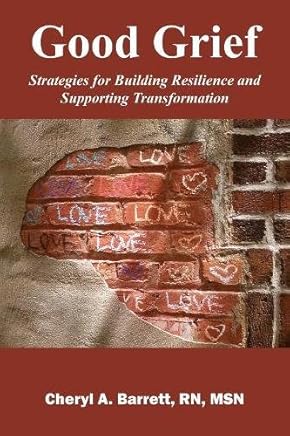
Good Grief: Strategies for Building Resilience and Supporting Transformation


(Some resources focus on providing the survivor support services, while others focus on providing guidance or instructions on how healthcare professionals can support survivors of grief and loss.)

BOOKS: (Just a few. I suggest visiting your local book store or doing a Google search. I prefer looking in the store as I can better decide what book is best for me.)

Checklist for Family & Survivors, by Sally Balch Hurme (2 books: 2014 or 2015) Published by AARP.
This book provides many helpful suggestions in checklist format very useful for those going through the grieving process. I wish I would have known about this resource sooner.

Heart Humor Healing, by Patty Wooten, RN (1994). Published by Commune-a-key.
This book offers patients, their families, and health care providers an alternative perspective to the sometimes frightening and frustrating experience of hospitalization and the challenges of illness. It is a collection of quotes about heart, humor, and healing that will touch, tickle and titillate everyone.

Stressed is Desserts Spelled Backward: Rising above life’s challenges with humor, hope, and courage, by Brian Luke Seaward, PhD (2007). Published by Whole Person Associates.
This book contains stories of love and humor, shared by real people — their stories of stress, survival, and peace. A good read for anyone.

The Art of Calm: Relaxation Through the Five Senses, by Brian Luke Seaward, PhD (1999). Published by Health Communications, Inc.
This book takes you on a journey through the five senses and provides examples in each of how you can use everyday experiences of the senses to achieve relaxation.

When Things Fall Apart: Heart Advice for Difficult Times, by Perma Chodron (1997). Published by Random House, Inc.
This book provides heart advice for difficult times: ways to use painful emotions to cultivate wisdom, compassion, and courage; methods for communicating that lead to openness and true intimacy with others; practices for reversing negative habitual patterns and techniques for working with chaotic situations. (A more spiritual view.)

WEBSITES: (There are numerous websites to consider. These are only a few.)

Dying in America at (www.dyinginamerica.org) is a multimedia documentary project, directed by award-winning filmmaker Carolyn Jones, that examines the dying experience through the eyes of nurses.
“It is our greatest hope that this website will offer some direction, comfort, and community for anyone facing these difficult times. Our Topics Page seeks to help you address specific issues you may be grappling with, or questions you may have. Our Tools Page seeks to help you discern, document and discuss your end of life wishes through a series of document-based steps.”
“We will never defeat death, but we can prepare ourselves and our loved ones for what lies ahead and make the experience of dying as rich and as meaningful as the experience of living.”

International Nurse Coach Association at (www.inurse.com) is an organization that provides training to nurses interested in becoming certified nurse coaches. These nurse coaches are trained to provide a person-centered, holistic, integrated body-mind-spirit perspective to healing along the continuum of life. Some have had special training in nutrition as well as end-of-life care. Nurses can visit this site to find out more about how to become a certified nurse coach. Anyone interested in contracting with a nurse coach can visit the site and go to “contact us” to request the names of nurse coaches in your area.

National Home Funeral Alliance at (homefuneralalliance.org) The NHFA empowers families to care for their own dead by providing educational opportunities and connections to resources that promote environmentally sound and culturally nurturing death practices. This is the place to find information about home funerals, including directories for where to find home funeral guides, home funeral education programs, home-funeral-friendly funeral directors, celebrants and clergy, and groups who will help families when needed.

Sacred Crossings at (sacredcrossings.com) — Their mission is to educate and support individuals toward a conscious, peaceful transition and to empower and guide families to reclaim the healing ritual of a home funeral. To explore this option, review their FAQs.

Huntington Meditation and Imagery Center at (huntingtonmeditation.com) — is an organization dedicated to bringing transpersonal understanding and transpersonal skills into the health and helping professions. By knowing how to awaken these qualities in your patients, clients, students, employees, congregants and others who come to you for help, you bring an added healing dimension to your work. Visit their website for details and class options for health care professionals, social workers, clergy and others. I used a lot of their techniques to assist me in my grief work.

Grief Share at (griefshare.org)There are many websites to provide support for various grief and loss categories: loss of a spouse, partner, child, pet. They may even be called GriefShare groups. These may be located in a hospital, a church or a residential home. Many sites to look through to find one that fits your needs.

Facebook — If you search “grief support groups” on Facebook, you will find a list of options to explore. This venue provides broader access for connecting to others experiencing grief. This is quite public with interactions from unknown sources. Some may choose this, while others prefer a more personal support group.

Bereavement Support Group — Another term to google for options of grief support online.

Hospice Foundation at (hospicefoundation.org).Then go to the section on End-of-Life-Support-and-Resources/Grief-Support/Support-GroupsThey provide some education about grief and loss. There is also a list of Support Group Resources:

The Compassionate Friends –– Support after the death of a child.

AARP Grief and Loss Resource ––  Support after the death of a senior.

National Widower’s Organization –– Support for men grieving a loss.

American Foundation for Suicide Prevention –– Support for suicide survivors.

Griefnet –– An organization of support for adults grieving a loss.

Hellogrief –– An organization of support for adults and kids grieving a loss.

OTHER: (Community resources)

Physician referrals to certified counselors: Your physician can offer you support, as well as direct you to qualified counselors certified in supporting emotional and psychological issues during grief and loss.

Friends and family: Consider this option as a strategy for real-time 24/7 support as your base of support, if it is available to you. Make a list of those who would be good resources in your time of need so it is readily available.

Local Churches

Hospital Support Groups


About the Author

Cheryl A. Barrett, MSN, RN, NC-BC, has been a nurse for over 30 years and is a board-certified nurse coach by the American Holistic Nurses Association Credentialing Center. As a nurse, she was always drawn to the psychosocial needs of patients recognizing that the patient was much more than their illness.
She believes that stress can have a significant impact on the mind/body/spirit resulting in distress of the “whole person.” No one is exempt from stress! However, stress can be modified, controlled, and in some cases — eliminated. Through her training as a Holistic Stress Management Instructor, Cheryl gained invaluable skills to support herself and others to decrease stress and achieve work-life balance. She promotes self-care as an essential component of any stress management program and has used many of the stress management techniques during her own life challenges, most recently coping with the death of her spouse. She has also been a speaker on this topic to local senior citizen groups.
In her role as a nurse coach, she has mentored students pursuing their bachelor’s and master’s degree in nursing to successful completion. She helped them feel more confident; improve decision-making, communication and leadership skills; and increase their personal effectiveness in accomplishing personal goals. Both academic learning expertise and guidance for achieving work-life balance were provided and supported self-care as an integral component of practice.
Writing has always been an interest of Cheryl’s. She has created newsletters, poems, and published articles in issues of Phi Kappa Phi’s Forum and the American Holistic Nurses Association’s Beginnings.
Currently, she is an active member of the Mooresville Art Gallery in Mooresville, NC, and supports the town’s soup kitchen with profits from her paper crafts.
Cheryl resides in North Carolina with her daughter, Bonnie.

For more information, contact her at:
           
Gmail — c.a.barrett116@gmail.com
Linkedin.com — Cheryl Ann Barrett, RN, MSN, NC-BC
Outskirts Press Author Webpage — www.outskirtspress.com/
goodgrief
FACEBOOK — fb.me/GoodGrief.CherylABarrett


Review This Book

Please consider reviewing Good Grief. Reviewers help writers and their audience find each other.

Cheryl A. Barrett and her potential readers would benefit from having you review this book on, for example: amazon.com or at OutSkirts Press Author Page — outskirtspress.com/goodgrief.

Please visit Cheryl’s FaceBook page to provide a review, ask questions, make comments, share posts with others and take advantage of helpful content related to grief and loss.
FaceBook — fb.me/GoodGrief.CherylABarrett.


###

With her permission, I am serializing here a near-final version of nurse Cheryl Barrett's valuable book on transcending grief. I had the pleasure of being her coach and editor through my Write Your Book with Me enterprise. 

Douglas Winslow Cooper, PhD


Perhaps the easiest way to obtain a copy of her book, published by Outskirts Press, is through this Amazon link: 


UNDERSTANDING SASSIE, 24. Sassie and Pop


Understanding Sassie: A Novel of Dog and Human Communication


Sassie knew that she was going home with Ruth today. 

When Ruth appeared with the leash, Sassie could hardly stand still.  Ruth was also excited and kept talking to Sassie about the farm.  I wonder what a farm is like, Sassie thought.

 Ruth had purchased a harness seat belt for Sassie and when they went out to the car, Sassie noticed that it was connected to the front passenger seat belt.  After Ruth put Sassie into the harness safety restraint, she got behind the wheel and put the passenger window down so Sassie could enjoy the wind in her hair. 

Ruth started the car and Sassie heard her say, “I can’t wait for Mom and Pop to meet you.  I want you to know that love will always be spoken in your new home.  Now let’s travel, and I want you to enjoy your ride.” 

Sassie did enjoy the wind in her hair and all the many scents she encountered along the short trip.  Ruth’s Mom and Pop were waiting at the door.  As soon as Ruth arrived, they came out to greet Sassie.  Pop had put some treats in his pocket for Sassie.  When he saw Sassie, he had a treat ready to give her. 

Sassie looked into Pop’s eyes and saw the love and his need for a dog like her.  Then Pop took Sassie’s toy from Ruth and started to shake it at Sassie.  Sassie gave him a Play Bow and danced around trying to capture the toy.  The love that flowed between 
Pop and Sassie was beautiful to watch. 

From that moment on, they were always together.  They went fishing, played fetch, walked everywhere together, and when Pop sat down, Sassie would lie at his feet.  Sassie learned some tricks that Pop loved to show off.  There was “Roll Over,” and “High Five” and “Spin” and “Crawl,” and when Pop put his hand to his ear, Sassie would “Speak.”

As time went on, Ruth noticed that Pop was losing weight.  She finally questioned him about it.  Pop admitted that when he got the test results they were not good.   He had advanced prostate cancer.  He had not wanted to share the news with Ruth. 

“Did Mom know?”  Ruth asked.  Pop admitted that she did. 

Sassie became the comforter of the family.  Pop never wanted to show his emotions, but if he wanted to cry, he would bury his head into Sassie’s fur and sob quietly. 
Pop began to make routine trips to the hospital for treatment.  Sassie would wait for Pop’s return on the welcome mat just inside the front door.  Whenever Pop came home from the hospital trip, Sassie would do her happy dance and give Pop a bath of sloppy kisses.  Pop continued to play fetch with Sassie, but he no longer took any walks to their favorite spots.

The day Pop went to the hospital for the last time, Sassie lay at the front door all day.  She continued to lie there whining and waiting for Pop’s return.  Sassie stopped eating and wouldn’t leave the front door area.

 Mom was upset to see Sassie’s constant vigil.  After one week, Mom decided to help Sassie understand what had happened.  Sassie did not wish to leave her spot by the door but was willing to get into the car with Mom.  She paced from car window to car window, looking for Pop. 

Mom drove to the cemetery and she and Sassie walked together toward Pop’s gravesite.  As Mom got closer, Sassie pulled away from Mom and ran directly to Pop’s gravesite.  She lay down on the grave, closed her eyes and just stayed there, quietly.  Mom did not disturb her nor talk to her.  After one hour, Sassie walked back to Mom and used her mouth to hand Mom her leash.  She was ready to go home.  After Mom and Sassie arrived home, Sassie kept kissing Mom’s hand as if to say, “Thank you,” and Sassie never again lay by the front door.  She now understood.


#

With her permission, I am serializing a chapter a week, on this blog, near-final material from this instructive novel by dog trainer Helen A. Bemis, published by Outskirts Press and available through amazon.com:  UNDERSTANDING SASSIE  

I coached and edited for Helen through my Write Your Book with Me endeavor.

Connect with all her books on Amazon. https://www.amazon.com/s?k=helen+a.+bemis&ref=nb_sb_noss
Wednesday, December 4, 2019

WHAT EVER HAPPENED....? Janet Schliff Book Talks 2019


FROM THE DESK OF… AUTHOR JANET JOHNSON SCHLIFF, M.S.ED.
What Ever Happened to My White Picket Fence?
My Brain Injury from My Massive Brain Tumor
BOOK TALKS AND SIGNINGS                             Where Janet’s headed in 2019…

Where Janet’s been in 2019

Janet spoke at the Poughkeepsie Brain Injury Support Group at the Poughkeepsie Galleria Mall in Poughkeepsie, NY, Saturday, February 23 at 12 p.m. 

Janet spoke at the Stanford Library in Stanfordville, NY, Saturday, March 9 at 10 a.m.

Janet spoke at the Howland Library in Beacon, NY, Wednesday, March 20 at 1 p.m.

Janet spoke at the W. Hurley Library in West Hurley, NY, Saturday, March 23 at 1 p.m.

Janet spoke at the East Fishkill Library in Hopewell Junction, NY, Monday, March 25 at 6:30 p.m.

Janet spoke at the Grinnell Library in Wappingers Falls, NY, Saturday, March 30 at 10:30 a.m.

Janet spoke at the Dover Plains Library in Wingdale, NY, Friday, April 5 at 6 p.m.

Janet participated in an Author Talk at the Saugerties Library in Saugerties, NY, Saturday, April 13 at 1 p.m.

Janet spoke at the Red Hook Community Center in Red Hook, NY, Wednesday, April 24 at 5 p.m.

Janet participated in the Authors’ Event at the New Creations Gift Shop in Fishkill, NY, Saturday, May 4 at 12 p.m.

Janet spoke at St. Timothy's Church in Hyde Park, NY, Sunday, May 5 at 11 a.m.

Janet spoke at the Moffat Library in Washingtonville, NY, Saturday, May 11 at 1 p.m.

Janet spoke at the Beekman Library in Hopewell Junction, NY, Saturday, May 18 at 10:30 a.m.

Janet spoke at the Pleasant Valley Library in Pleasant Valley, NY, Tuesday, May 28 at 6 p.m.

Janet spoke at the Blodgett Library in Fishkill, NY, on Saturday, June 8 at 1 p.m.

Janet spoke at the Westchester Medical Center's "Lunch and Learn" in Valhalla, NY, on Friday, June 14 at 12 p.m. (She has been invited to speak at two more hospitals.)

Janet spoke at the Fishkill Ability Center in Fishkill, NY, on Thursday, July 11, at 11 a.m.

Janet spoke at the Marlboro Library in Marlboro, NY, on Tuesday, July 16, at 7 p.m.

Janet spoke at the Plattekill Library in Modena, NY, on Saturday, July 20, at 1 p.m.

Janet spoke at the Rosendale Senior Center in Rosendale, NY, on Wednesday, July 24, at 2 p.m.

Janet spoke at the Newburgh Library in Newburgh, NY, on Monday, July 29, at 7 p.m.

Janet spoke at the LaGrange Association Library in LaGrange, NY, on Wednesday, September 11, at 6 p.m.

Janet participated in the New Creations Gift Shop Authors’ Event in Fishkill, NY, on Saturday, September 21, at 12 p.m.

Janet spoke at the Sport and Physical Medicine Center’s “Lunch and Learn” in Kingston, NY, on Tuesday, September 24, at 12 p.m. [Continuing Education Units (CEUs) were earned by attendees.]

Janet spoke to the Red Hook High School health classes in Red Hook, NY, on Friday, October 4, throughout the day.

Janet spoke at the Pawling Rec Center for Seniors in Pawling, NY, on Wednesday, October 9, at 12 p.m.

Janet spoke at the Chestertown Library in Chestertown, NY, on Saturday, October 12, at 11 a.m.

Janet spoke at the Bolton Free Library in Bolton Landing , NY, on Tuesday, October 15, at 7 p.m.

Janet spoke at the Office for the Aging in Kingston, NY, on Wednesday, October 23, at 1:30 p.m.

Janet spoke at the Sarah Hull Hallock / Milton Library’s Tea and Talk in Milton, NY, on Friday, November 1, at 3:30 p.m.

Janet spoke at the Northern Dutchess Hospital Acute Rehabilitation Unit in Rhinebeck, NY, on Friday, November 8, at 12 p.m.

Janet spoke at the Journey Support Services in Poughkeepsie, NY, on Monday, November 18, at 12:30 p.m.

Janet will speak at the Woodland Pond Health Center in New Paltz, NY, on Wednesday, December 11 at 2:30 p.m.

Janet has been invited to speak at more high school health classes, hospitals, and senior centers, dates in 2020 to be determined.


More talks are being planned for 2020… contact her at 845.336.7506 (h) or 845.399.1500 (c).                                                   

3 December 2019


Sunday, November 24, 2019

UNDERSTANDING SASSIE, Kong Toys


Understanding Sassie: A Novel of Dog and Human Communication


Millie was enjoying her visits with Mike and Goldie.  Mike was savoring those home-cooked meals that Millie prepared whenever she came to visit.  Most of all, they both appreciated the savings that occurred when they went grocery shopping together.  Millie loved to use coupons and plan meals with the food that was on sale.

Mike just loved to spend time with his two favorite girls, Goldie and Millie.

Millie was practicing the dog training skills that Ruth had been showing her.  This was positive reinforcement training or as Ruth told Millie, “I call it ‘training with tools of love.’”  

Goldie quickly learned the lessons of Sit and Down.  She even enjoyed the Give Me Your Paw trick. 

The latest training challenge involved Goldie's being left alone.  Goldie enjoyed Mike's and Millie’s company and saw no joy in being left behind. 

Ruth suggested using a “mind game” to keep Goldie busy and happy.  She explained the use of the Kong toy as a “mind game.”  Millie purchased several Kong toys to use to keep Goldie pleasantly distracted. 

The Kong is a brand of toy.  It was a hard rubber cone which had a small hole at one end and a larger hole at the other end.  Treats are placed into the large end and then something sticky, like peanut butter, would be used to seal the treats into the toy.  The Kong toys were given to Goldie just before they left the house.  The Kong toys would keep Goldie busy as she chewed and licked to get those delicious treats.  This was an enjoyable distraction for Goldie and kept her occupied for hours. 

Goldie began to look forward to their leaving because she got this special toy filled with delicious treats.

On one particular day, Millie had gotten the treats together and was ready to fill the Kong toys.  She then discovered that the Kong toys had been hidden throughout the house.  Mike saw Millie get down on her knees, crawl around the floor, and look under every overstuffed chair and cabinet.  “Millie! What are you doing?”  Mike asked. 

Goldie had been closely following Millie’s movements.  The look on Goldie’s face seemed to also ask, “What are you doing?”

Frustrated, Millie tried to explain her problem, “I understand that Goldie likes to hide her special toys, but I wish she would understand that if I cannot find the Kong toys, I will not be able to fill them with the treats!” 

The Kong toys were soon found, and the treats were packed into the toys.  Just before Millie and Mike left the house, they handed the toys to Goldie. 

When they came home, Mike was the first to enter the house.  He began to laugh and couldn’t wait for Millie to see what he had found.  As soon as Millie came in, Mike began to wave at her and said, “Come here!  You have got to see this!” 

Millie started to walk toward Mike and asked, “What are you so excited about?” As she got nearer to Goldie’s crate, she discovered what had made Mike so excited.  Looking down at the area in front of Goldie’s open crate, she saw all the Kong toys lined up in a row.  

It was as if Goldie said, “Here they are!  No need to search for them anymore.”

Laughing, Millie turned to Mike and said, “Goldie really does understand everything we say!”


#

With her permission, I am serializing a chapter a week, on this blog, near-final material from this instructive novel by dog trainer Helen A. Bemis, published by Outskirts Press and available through amazon.com:  UNDERSTANDING SASSIE  

I coached and edited for Helen through my Write Your Book with Me endeavor.

GOOD GRIEF: Witness to Others What You Have Learned


Good Grief: Strategies for Building Resilience and Supporting Transformation


I don’t know; I think I’d be gloomy without some faith that there is a purpose and there is a kind of witness to my life.
— John Updike, Novelist

These are words that I take to heart. I have often thought, what good is it if I kept what I learned and experienced to myself while I watch others suffer?

We all learn many valuable lessons on our journey through life. As children, we are taught many lessons about what to do and how to behave daily. We grow older and learn new lessons as we have different experiences, some good and some not so good. As parents, we try to share these lessons with our children, hoping they do not make the same mistakes we made. Aging occurs, and we learn even more lessons of life. Lessons that are valuable, but do we recognize the value of these lessons? Do we keep them to ourselves or do we offer them up to help others?

I have wanted to help others all my life, with what I knew and what I’ve learned so their lives would be easier, their suffering not as acute, hoping they’d skip some of the pain in the process. Yes, I was a compulsive helper in this respect; being a nurse helped to meet that need. But, I have learned that not everyone loves to hear, “Let me tell you what I learned, so you don’t make the same mistakes.”

Some, even most, people were not interested. They wanted to go their own ways, make their own mistakes and live their own lives. OK, then, I thought, they have a right to run their own lives. This hurt, but I have always been willing to learn, to try to do better…even if it took years. And it did.

But what if you could approach this sharing of life’s lessons in another way? I thought. I learned that there are many ways to do this that are more effective and that maintain respect for others.

One way is to be a witness to others. A witness, according to the Merriam-Webster Dictionary, is “…one who has personal knowledge of something, something serving as evidence or proof, public affirmation by word or example….”

During my journey through my grief and loss, I learned a lot. Each day, even now, I am learning: how to go on alone, how to find purpose, how to find peace and joy, how to be brave, how to help others with what I learned…and to bear witness.

I have always wanted to write a book, but I never had a clear direction as to the content. The death of my husband was the stimulus for me to pursue this dream…although I did not recognize it at first. I was only journaling my thoughts, terrified that I would forget some part of what occurred. And then, something amazing happened. Interactions with people during this time stimulated words that became written down as stories and lessons learned.

Writing this book became my purpose and a learning opportunity for me about how to share and care for others. In this book, I tell my story, bearing witness to my journey: the sadness, grief, humor, progress and setbacks, helpful tips, and encouragement.

I hope you, too, can be a witness to others who are going through grief and loss. I urge you to provide caring, compassion, and support…instead of telling others how they should grieve or how long it should take.

Encourage with gentleness and love those who are suffering.

Be a witness!


###

With her permission, I am serializing here a near-final version of nurse Cheryl Barrett's valuable book on transcending grief. I had the pleasure of being her coach and editor through my Write Your Book with Me enterprise. 

Douglas Winslow Cooper, PhD


Perhaps the easiest way to obtain a copy of her book, published by Outskirts Press, is through this Amazon link: 


Review of YOUR BUSINESS YOUR BOOK


Ginny Carter, a friendly British competitor of mine, graciously sent me a review copy of her newest book, Your Business Your Book, and I am impressed, though not surprised, by how good it is. It would certainly have been helpful to me when I wrote my business book, Write Your Book with Me, to promote my own company of that name.

Why write a business book? Ginny debunks nearly a dozen excuses people give for not writing theirs, then gets down to a few reasons that end up compelling the business person to become a writer: doing the book clears your thinking, serves as a thick business card, and puts you ahead of others in your industry who have not yet written theirs. You can stack yours on that table by your podium when you give the invited talk your new book attracted. Then sell and sign your book-baby to those in the audience eager to read it.

How to get from your here and now, bookless, to your there and then, being an author: PLAN, WRITE, PROMOTE, her three-part battle plan that includes her 17 valuable chapters. I’d list these chapters here, but the wise Ginny Carter purchased the “Look Inside the Book” option at amazon.com, and they are there in all their glory, part of the 10% or so of the book Amazon displays.

PLAN

It starts with thinking: what do I know that others would like to know?

Actually, it starts, as Ginny Carter explains, with setting aside the obstacles your mind: I don’t have time. It won’t be perfect. Where shall I start? I hate/can’t write. I don’t know enough. No one will read it. Too much competition! Some may dislike it. She answers these objections, then issues a warning: don’t write a book if you have limited knowledge of your business, if you are just starting out.

Tools: “something to write with, something to write on, and your brain.” You’ve got these. She adds that a place to write with few interruptions will help. Computer? Yes. Software? Microsoft Word or even better, Scrivener. (I use Word.)

Size: topics influence size. Something around 40,000 words will work, though e-books can be shorter and major efforts can be longer.

Time: “Longer than you think, then double it.” Like Ginny, I coach and edit writers. I find it will take hundreds of hours of work but not thousands before their book is done. She recommends counting words in some of your own blog posts, then tripling the time per word to adjust for research and editing.

Enterprise: You should be in a field where writing a book will advance you, such as coaching, consultancy, speaking. Ginny herself does these.

More excellent advice: know what you want your book to achieve. I am reminded of Covey’s “Begin with the end in mind.” Ginny and I would want more clients.

Generally, you will make your money from something other than selling your book. Some common goals: help readers, be seen as an expert, attract clients, get speaking opportunities, establish yourself in a new niche, build and email list, sell coaching or a training program, gain satisfaction and a sense of achievement. Without your having clear goals, your book is likely to achieve little.

For whom are you writing this book? Ginny agrees with other coaches who advise would-be authors to create an “avatar,” an imaginary reader about whom you think you know a great deal. Then, streamline your book, direct it to your target audiences, such as future clients, customers.

“Unearth the gold,” by which Ginny Carter would have us understand, “Readers don’t buy books, they buy solutions that make them feel good.” Think about that long and hard. As others have written, the reader wants WIIFM, “What’s In It For Me?” She advises we give them what they want, not what we think they need.

Some other hints: What would your reader do “even if…”? What makes the writer special? What are you passionate about? You can have quite a following if even a small percentage of a large population agrees strongly with you. You’ll need to know your stuff well to pull this off.

She urges would-be authors to fill in this crucial information, “I want to help [my target readers] to [my expertise] so they can [the result for them] and so I can [my goal for myself].”

Return on Investment [ROI]: make sure you get some! More and better clients, opportunities, connections. To maximize these, you need Lead Magnets (giving something away to build an email list, for example), Seeding (noting your own business successes occasionally in your book), Recruiting Influencers (getting some others to participate and eventually to promote). Ms. Carter lists plenty of tips for doing these marketing things well, and she advises that one take advantage of a few social media, like LinkedIn and Twitter, but not spread oneself thin on too many.

Title: Love at first sight? The beginning of your seduction of the prospective reader is your title. Don’t blow this. Her title itself is excellent: Your Business Your Book, pithy and personal, telling you what you’ll be getting. Memorable. What benefit? What feelings? Name the audience, Nice Girls…. Make it intriguing, perhaps contradictory, like The Millionaire Next Door. See what Amazon has already. Then, flesh it out, “Your subtitle does the heavy lifting for the main title….” One of my own writing clients published Good Grief, about making the best of a bad situation.

Skeleton: Your book will flesh out the skeleton/outline you create first. Ginny Carter describes Mind Mapping and the use of Sticky Notes. I like to put the book in a skeletal file that starts with a Title Page and goes on to Dedication, etc., through the chapters and to the end notes.

Book type: Self-help, how-too, transformational memoir, thought-leading-inspirational, interviews…all are described in useful detail. In some doubt? Check some books you have found valuable.

Outline, outline, outline: Here’s an example:

- Introduction: set up
- State the main point
- Make subsidiary points
- Give stories and examples
- Conclude, summarize.

Types of readers: Ginny Carter notes that some need to know Why? Some What? Some How? Some What if? Cater to all four. Tell them why to do it, what to do, how to do it, and responses to what if?

Mine what you have written already and bring a pen with you everywhere, jotting notes on paper or even your hand.

WRITE

Put your arguments in a plausible order. Write each simply and clearly. Bring your reader along. She tells an amusing story about current teenagers trying to make a phone call with an old rotary-dial phone. (Pick up the receiver first!) As you write, make every paragraph count. “Use plain English.” Be sparse. I think authors/editors Strunk and White wrote, “omit needless words.” Carter adds, “punctuate for effect”…clarity and variety.

Persuasive writing: Your Introduction should “capture your readers’ interest and earn their trust.” Why should they listen to you? Write your Introduction last. Tell what the book is about. Be empathetic. Summarize your solution. Explain why you are credible. Promise benefits. Seduce the reader to keep going chapter by chapter: start and end each strongly, give specifics, use metaphors (she cites Mardy Grothe’s I Never Metaphor I Didn’t Like, and gives some ideas about constructing metaphorical bridges to subjects), mean what you say and say what you mean and say it the way you would say it in person, avoiding clichés and adverbs and repetition. Tell stories, personal ones if possible, and make points with them: have a hook, set the scene, add conflict, let it develop, resolve it, call to action.

Resistance: fear is the source of most “writer’s block.” Fear of what? Rejection? Incompletion? Inadequacy? Well, write…though scared. Or dictate. Microsoft Word has a dictation capability, and before that, I used Dragon Naturally Speaking, which Carter notes favorably.

Carter and I also favor the rotten first draft, as something beats nothing every time, agreeing with Ann Lamott’s advice in her Bird by Bird. Just don’t send it out to your client!

“Don’t write the book yourself….50% of nonfiction bestsellers are ghostwritten….” That’s too bad, and I am not in favor of it, but I’m not a ghostwriter, although not everything one writes gets one’s name on it. Editors add as well as subtract. Carter has a half-dozen good reasons why there are advantages to using a ghostwriter. I agree; just make yours a co-author.

Carter also coaches, and so do I. The author has to do more of the work but will learn from the experience, pay less, and be the actual author. Coaches help plan, motivate, edit, and advise on promoting your work.

EDIT

Carter has a great Mark Twain quote to start this section, “Editing is easy. All you have to do is cross out the wrong words.” Strunk and White in their classic, Elements of Style, urge, “Omit needless words.” A famous author (the name is forgotten) advised us to “kill our darlings.” Some stuff is not darling, and the unattractive parts are like blemishes on an otherwise pretty face. She and I agree: write the first draft before nit-picking it, or as she quotes, “draft hot, edit cold.”

The steps Ginny Carter recommends include a sticky-note paste-up of the chapters and printing-out of the book, followed by editing for content and readability, correcting, editing for style, including variety and rhythm. Then, hire an editor! The better the draft and the better the editor, the better the book. Well, if you can afford it, she’d have you start with an editor who helps with the structure, then one for the copy, and finally a proofreader.

Next, come beta readers, people who are kind enough to critique your draft final and who resemble your target audience.

Finish! She quotes Erica Jong on how hard it is to declare the book is done. I had a client who could not stop “improving” his book and never published it. Once it is done, you will be judged. Takes courage.

Bits and pieces are discussed: Praise, Foreword, Acknowledgments, About the Author. Her insight all helps.

PUBLISH

Ginny Carter knows the publishing options well: traditional publishers, self-publishing, and hybrid/partner versions of these two. She discusses and dissects all three…in depth. I found I agreed with her, but I won’t go into that here. We have both found that for the non-famous, but talented, people we help, the hybrid/partner publishers are most suitable.

PROMOTE

She tells the bad news–promotion is a risky gamble–with the good news–almost anything good you do will add to your “fame” and “stature.”

Pre-publication: have an Internet author website, be active on social media, find allies to serve as beta readers or reviewers. Read Joanna Penn’s How to Market a Book.

Post-publication: add more social media plus talks and interviews now that you have a published book, rather than a prospective one. Blog. Email. Twitter. Facebook. Consider those to be verbs! Use Amazon to the max: author page, even mutual reviews with other authors. Get LinkedIn? Maybe. YouTube is the second-biggest search engine after Google. Podcasts? There are many, most with small audiences, but some have just the people you want to reach.

Details of having a successful email list are given. You may not want to bother, but most who advise us on selling our books recommend it.

One of my own coaching clients has given roughly fifty little book talks, at libraries, senior centers, bookstores, and a few radio and television outlets. It’s sort of old-fashioned “offline” promotion that Carter describes, as well; it has not made my client’s book a bestseller, but has made some worthwhile contacts for her, and has provided an enjoyable hobby.

Something like a million new book titles will be published in the USA this year. Only a small fraction will be popular enough for you to have heard of them. Your book is not likely to be among them. However, it can reach friends, family, associates, neighbors, potential clients, and just possibly a much wider audience, if you are skilled…and lucky.

NET

Ms. Carter’s book will help her readers hone their skills and produce a better business book than they would have otherwise, and it will enable them to make sound choices about publication and promotion, after which all they need to do for their book to be a wild success is to promote it vigorously…and get lucky.
Your Business, Your Book: How to plan, write, and promote the book that puts you in the spotlight

To get Ginny Carter's book, go to amazon.com:


To have me help you write, finish, and publish your own book, go to  WriteYourBookWithMe.com