Saturday, October 8, 2016

UNSELFISH SELF-PROMOTION (OLSON, 2009)


The Internet provides unprecedented opportunities for Jorge Olson’s Three Cs: Communicate, Collaborate, Commercialize. Get known, liked, trusted. Form partnerships. Give value for value.

The key: be generous, unselfish in your self-promotion, as Olson (2009) writes:
…the notion of promoting yourself by being unselfish is very powerful, and you will be an expert by the time you are done reading this book.… Being unselfish is nothing new in business or politics, especially among seasoned salespeople. In sales, you place the customer first. This is an example of unselfish promotion.

To help others, you have to understand their needs and wants. They will then appreciate what you do for them, because what you choose to do will be suitable, appropriate to their wants and needs. Unlike most people, you will be spending somewhat less time thinking about yourself and somewhat more time thinking about them.

By writing, you establish a link, a connection with people that lasts at least as long as it takes them to read what you have written, and which may stay in their minds much longer. You have usually given them something of value, which may make them want to reciprocate.

Writing helps you add to your promotional toolbox, which includes Internet marketing, articles, social networking, public speaking, business cards (some people use several different types), books, press releases, videos, webinars….

The key is that you give before you get.

For business owners, Olson (2009) posits Internet Marketing Rule #1: Don’t build a self-indulgent website. Writers can profitably heed this, as well: promote your book or books on your website, but give the visitors something more: excerpts, deals, related information on the books’ topics, colorful and interesting graphics, information about writing or the book industry. Give value to get eyeballs.

Olson’s Internet Marketing Rule #2 --- Build Value: “you have to provide what people look for, information, entertainment, collaboration, or commerce.” Build the website for the visitors’ benefit. They say, “Content is king.” Valuable content, that is.

As an author, you will likely have an author website, which is your main website, and websites for each of the books you have written. Give stuff away. Collect email addresses. Make sure they know how to reach you.


For more details on unselfish self-promotion see Olson (2009).


###

Excerpts from my recent opus Write Your Book with Me. More information about working together is at my coaching-writing-editing site, http://WriteYourBookWithMe.com.

Planning on Living to 98?


Do you want to live to be 98? My mother lived that long. She enjoyed almost all but her last year. Do you think you’d still enjoy life into your 90s?
I just took a very brief MetLife insurance Company test on the Internet, and based on that, I’ve got a 50% chance of reaching 93 and 25% chance of 98. Surprise! How about you? Here’s the link to the MetLife Life Expectancy Calculator. 
Interestingly, the test does not ask about health status directly, but it requests blood pressure, height, weight, gender, marital status, drinking, smoking, and exercise. Nothing about familial longevity. The test just gives estimates, averages. Its goal is to alert the user to how much longer he or she will live, and how much longer retirement funds need to last.

Even the Average Woman in Her 60s Will Live a Couple More Decades
If you don’t want to take that little test, you can note the numbers provided by the U.S. Department of Health and Human Services. Their tables indicate that white women 60 to 70 years old now can expect on average to live to 85 to 86…and you’re above average, no? You are if you’ve been paying attention to your health, avoiding obesity, limiting alcohol consumption, exercising, and not smoking. These factors raised my own life expectancy from 86 for the average white male my age (73) into my 90s. Healthful practices could do the same for you.
Women tend to live longer than men. Race plays a role. Asian-Americans have longer life expectancies, African-Americans shorter. Family genetics also plays a role, as will your current health status.
Rather than its being “later than you think,” you probably will live longer than you expect. It’s time to consider these elements of a successful extended retirement: health, wealth, relationships, activities, adjustments.

Protect Your Health
The elements of the life expectancy calculator give you a heads-up on what’s important for preserving your health: weight, blood pressure, exercise, alcohol, and smoking. Nothing you can do about your genes. Make sure to get medical check-ups regularly and heed the advice of medical professionals. In addition, make changes to your home and habits to reduce the likelihood of falls. Improve your nutrition. Walk more.
If you live in the U.S., you’ll probably be getting Medicare after 65 [some with low incomes will have Medicaid] and you will likely add an insurance supplement. Note that “affordable” medical plans have significant deductibles, charges that you will pay before the insurance coverage kicks in, and there often are co-pays. Research this or get some professional advice or do both.

Don’t Run out of Money
You’ll want to supplement your Social Security and other retirement funds. Part-time work might be suitable. Work can make your week more varied and interesting.
Investments usually include savings, home ownership, stocks, and bonds. [I prefer Exchange-Traded Funds, ETFs, index funds that just move with market averages and have minimal management costs.] Diversification is key, as is getting advice from someone knowledgeable but who does not have a conflict of interest. Don’t invest in anything you don’t understand.
Withdrawing funds from a tax-deferred retirement account? The U.S. government requires its citizens to calculate the minimum yearly withdrawal based on a life expectancy of 100. Withdrawing more will have you run out sooner.

Maintain and Enhance Personal Relationships
Tend to your friendships and family ties. Perhaps there are little disagreements or slights you can decide to ignore. Sometimes I meet with friends and family by driving to a restaurant midway between our homes. I’ve just started to make “telephone dates” with too-distant friends and family members, setting mutually convenient times to chat. I wish I’d started that sooner.

Relish Your Free Time
Your free time can be a blessing or a curse. With health and wealth, your options will be many. Without both, you’ll need to be more resourceful. Poor health can be very limiting, but not having much money needn’t be. Inexpensive activities include volunteering, local travel, and most hobbies.

Is It Time to Hit the Road?
Traveling often requires both health and wealth, especially the farther and longer the trips. You may want to find a partner to share these trips with.

Consider Downsizing
Freeing up some of your money and reducing your home-maintenance time by moving to smaller quarters can make good sense. Keep in mind whether you are likely to need extra room for visitors or aides.

Provide, Provide
The good news: you may well live longer than you expect. You should heed the title of Robert Frost’s poem, “Provide, Provide.” Take steps now to enhance your health, wealth and personal relationships to enjoy these after-60 decades.

Questions
What is your life expectancy now? How are you planning to have enough free time, money, and health to enjoy it? Please join the conversation.
###
Douglas Winslow Cooper, Ph.D., is a former Harvard science professor. He still publishes, and he helps others write and publish their books via his http://WriteYourBookWithMe.com. His life's central theme has been his half-century romance with his wife Tina Su Cooper, now quadriplegic for over a decade due to multiple sclerosis, receiving 24/7 nursing care at home, as discussed at their website here.


###

Presented in a shorter, further edited form at http://sixtyandme.com/7-habits-to-help-you-live-long-and-prosper-into-your-80s-and-90s/

Saturday, October 1, 2016

How to Get Maximum Publicity in Minimum Time


Steve Harrison of Bradley Communications Corporation gave a web seminar, a webinar, having this title. I listened raptly as he presented over an hour of useful information for free, followed by a twenty-minute pitch for services his company offers.

Harrison started out in journalism, having majored in English in college. He soon joined his brother Bill Harrison in publishing the Radio and TV Interview Report, started in 1987, and the Harrisons and their Bradley Communications Corporation have by now coached over 12,000 authors and speakers, helping them to obtain successful promotion of their books and presentations.

The company’s mission is simple: to help you achieve your mission. Among the successful authors that they have helped obtain widespread dissemination of their works are Jack Canfield and Mark Victor Hansen, whose Chicken Soup… line of books have sold over 500 million copies. Another author they helped to succeed is Dr. John Gray, whose Men Are from Mars, Women Are from Venus relationships book and associated activities have made him a millionaire many times over. They also coached Robert Kiyosaki, whose Rich Dad, Poor Dad book also rocketed into a highly successful worldwide publishing orbit.

Publicity is better than advertising because it is free, more credible, and tends to multiply, as media coverage leads to more media coverage. It’s almost viral.

Publicity makes you an expert. This then increases traffic to your website, word-of-mouth recommendations, distribution, social media buzz, buyers for your product, and makes you sought out for speaking engagements and interviews, giving you the opportunity to raise your fees and product prices and generate even more publicity. You establish a virtuous circle, where success leads to more success. “The rich get richer.” Well, less poor anyway, as most books lose money.  

It surprised me to learn that every day over 100,000 media outlets are seeking guests of one sort or another, interviewees who are in some sense experts, due to education, training, or experience. Despite this, most authors and speakers fail to promote themselves successfully, remaining relatively unknown. Jack Canfield has commented that not promoting one’s book is much like giving birth to a baby and then leaving it on someone else’s doorstep. If you have something worth communicating, then self-promotion also serves others.

Harrison described seven different ways in which famous authors and speakers differ from those who remain unknown.

First, the unknowns have tended to talk about their products, whereas the famous have understood that they must direct attention to good ideas. The famous understand the need for a “hook.” A hook is an attention-grabber, a teaser, the kind of headline you see on the cover of popular magazines. On radio or TV a hook might be prefaced with the words “coming up….” What follows can usefully be a statement of how to do something, the countering of a myth, presentation of a prediction, or the proposing of a question, such as, “Is your house making you sick?” (I would add that journalists have a favored set of question starters: Who? What? When? Where? Why? How?)

Second, famous authors and speakers give reasons why they need to be covered NOW. They have a timely hook: a season, anniversary, holiday, news event---sudden or predictable.

Third, the famous authors and speakers have not relied on a single hook but have developed multiple, good hooks. Harrison gave as an example a hypothetical book, Nutrition 101. Certainly, one would approach media outlets that are centered on fitness and health, but Harrison gave examples of tailoring the message for those outlets interested in consumer affairs, personal finance, personal relationships, and self-improvement. An example from his talk would be for the author of Nutrition 101 to offer to speak about “five ways to trim your grocery bill” or “how your beloved may be sabotaging your diet.”
Speaking about multiple hooks, Harrison presented the following list of media interest groupings:
·      Small business and entrepreneurial advice
·      Parenting and family
·      Personal finance
·      Relationships
·      Christian
·      Women’s
·      Consumer advice
·      Sales and marketing
·      Psychology and self-improvement
·      Health and fitness
·      Leadership and management
·      Career advice
·      New Age and spiritual
·      Alternative health.
     No doubt there are more, and each of these could be further sub-divided into narrower niches.

Fourth, the famous utilize many different media types to maximize their exposure:
·      Radio        
·      Television
·      Newspapers
·      Magazines
·      Trade-published newsletters
·      Blogs
·      Podcasts
·      E-zines
·      Tele-seminars
·      Webinars
·      Conferences.

Who will become the new Oprah Winfrey? Bloggers may deserve this title. For example, the blog babble.com is the 276th most popular website, receiving over 4 million visitors per month. To get your message on such a blog, you can offer a guest post, offer to be interviewed, present a book to be reviewed, give away some chapters of your book, and offer your book as a prize. To be successful doing this, however, you must research the blog, to make sure that what you’re offering is appropriate.

Fifth, the famous have had publicity plans, knowing WHO is their core audience, WHAT they read or watch, and WHEN various topics will seem timely to them.

Sixth, the famous often prepare the ground for their publications and presentations by getting publicity before the book is completed. One good way to do this is through the creation of short, few-minute videos, placed on YouTube, which has become one of the top search engines on the Internet. In 3 minutes one might cover a topic such as listing “the top reasons men are afraid of commitment.” Be sure to include links to Facebook, Twitter, and LinkedIn.


Seventh, the successful have learned that they cannot do this all on their own. There is a lot of work involved, with special skills, data bases, and experience needed. They need the help of professionals, such as the Harrisons and their Bradley Communications Corporation. For  $2500, the Harrison’s will give you an in-depth consultation with one of their consultants, at least four valuable publicity hooks, three half-page ads in their Radio and TV Interview Report, four ads in their publication Experts4Interviews, a 90% discount on attending Steve Harrison’s multiple-day $2000 publicity workshop, and they will shoot, edit, and upload five videos for you. They placed the value of this package at over $5000. Those who are interested in learning more about their program should go to the website http://specialpublicityoffer.com .

###

Excerpted from my recent opus, Write Your Book with Me. 

See also  http://WriteYourBookWithMe.com.

Monday, September 26, 2016

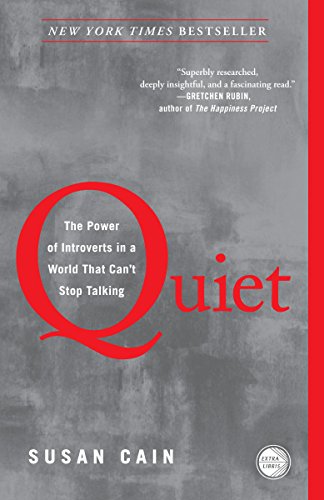
Quiet! Thoughtful, Sensitive Introverts at Work…and at Play

Quiet: The Power of Introverts in a World That Can't Stop Talking by [Cain, Susan]

Must you be pushy to succeed as a woman over 60?
Books and articles on becoming successful often emphasize personality over character, urging natural introverts (about one-third of the U.S. population, and usually women) toward imitating extroverts. Au contraire! Former Wall Street lawyer Susan Cain defends introverts like herself in her best-selling, widely enthusiastically reviewed recent book, Quiet: The Power of Introverts in a World that Can’t Stop Talking.


Making of the Meek and of the Bold
Children more sensitive than average to their surroundings, parents, and peers tend to become introverts as adults, seeking quiet rather than noise, calm rather than activity, liking being alone. Such sensitive children become more considerate and agreeable than most, often preferring individual achievement to group endeavors. They also gravitate toward individualized participation in the arts and sciences.
Introverts are unusually sensitive, thus empathetic; they speak more softly and like to be spoken to softly. They laugh more than do extroverts, yet prefer more serious topics. Introverts are more sensitive to loss, being cautious, risk-averse, avoiding controversy.
Extroverts are more attuned to gain, risk-seeking. Extroverts enjoy competition, sometimes even relish controversy. They are stereotypically leaders. Acting like an extrovert, including when socializing, is an effort for introverts, but many can do it, sometimes convincingly.
Which type are you? You can investigate by taking the widely-used Myers-Briggs Type Indicator online here. Most people are not “purely” one type or the other, instead lying somewhere between the extremes.
If you are pretty much an introvert, you aren’t denied a happy and fruitful life, however.

How Do Introverts Succeed? “Still Waters Run Deep”
Working alone or in small groups, introverts succeed by giving greater thought to their endeavors, diligently, and by using their natural tendency to be empathetic to form close relationships with a few others, drawing out their best ideas. Steve Jobs’s co-developer of the Apple Computer, Steve Wozniak, much preferred working out problems on his own rather than in a group setting, and this istrue of many successful inventors and artists.

Although those who speak fluently and forcefully are stereotypically perceived as having greater leadership ability and as being brighter than their quieter peers, neither of these has been found to be true.

Action-oriented extroverts are reward-sensitive, more likely to leap before they look; introverts are loss-sensitive and tend to look before they leap. Wall Street extrovert bulls may fuel rising markets; introvert bears play it safe, lessening their losses on the downturns.

At play, introverts prefer socializing with fewer people in quieter and more intimate settings than do their more outgoing, extrovert friends. A “mixed” introvert-extrovert couple will need to recognize this and seek settings and events that are compromises. Alternatively, they can decide to create schedules that alternate between their preferred styles.


Too Much Talk?
Susan Cain’s subtitle, The Power of Introverts in a World that Can’t Stop Talking, suggests a frustration with the garrulousness of some people. Extroverts can hog the conversation, making introverts hardly heard. Both should be able to contribute.
Since they are not engrossed in framing what they will say next, introverts are generally good listeners. Whether in school or at work, such quiet ones need to have their opinions solicited, preferably with plenty of advance notice. Disliking surprises, they may do better by writing out beforehand what they intend to say.
Some people talk because they want to get something from their listeners rather than want to give something. A manipulative talker argues, persuades, nudges, suggests, pleads, berates, and wheedles, to name a few. Conversation should be a form of exchange, a trade. If one party is lying or deceptive, this is exchanging counterfeit words for honest words of the person he is talking to. No wonder we prize honesty.

Or Too Little?
Granted, virtues can be overdone, becoming vices. Too little talk makes us mysteries to one another. Misunderstandings arise. Sometimes we must speak up and ask others to do so, too.

“The Meek Shall Inherit the Earth” (Matthew 5:5)
Introverts can flourish in an extrovert-dominated world by focusing on their talents and natural empathy, occasionally pushing themselves to be more outgoing to be sure to be heard and heeded.
If the meek do inherit the Earth, it will probably be run by extroverts…getting many of their good ideas from introverts, often women. As Nobel physicist Stephen Hawking noted, “Quiet people have the loudest minds.”

Questions
Are you more an introvert or extrovert? In which situations, in solitude or in a group, do you do your best work? How have you adapted your style on occasion?
###

Douglas Winslow Cooper, Ph.D., is a former Harvard science professor. He still publishes, and he helps others write and publish their books via his http://WriteYourBookWithMe.com. Douglas’s life's central theme has been his half-century romance with Tina Su Cooper, quadriplegic for over a decade due to multiple sclerosis, receiving 24/7 nursing care at home, care discussed at their website here.

###

Originally published in somewhat edited form at:
http://sixtyandme.com/the-quiet-power-of-being-an-introvert-after-60/

Saturday, September 24, 2016

"Publishing: Traditional, Subsidy, Indie"


Traditional publishing is done through a publishing house that will pay you an advance against the royalties that your book will earn. Because they are taking much of the financial risk, they are cautious about what writers they will publish. They will exert considerable authority over your manuscript’s contents. It may be a year or two from submittal to printing. If they accept your book, they will print thousands, lowering their cost per page. They once did much book promotion, now less. Generally you will need an agent who will approach them and vouch for you and handle the subsequent negotiations. Getting an agent is usually hard, as they do not want to waste their time on someone whose book is not likely to sell well. They get a percentage of the royalties/advance. If you are a celebrity, they will even pursue you. If not, you take your chances with query letters and sample chapters. Many books are available on these topics.

Subsidy publishers, like Outskirts Press that I have used, will publish your book because you pay them to set it up, and they get some money from every copy sold. Although they want to keep their reputations intact, and thus won’t publish just anything, they are much more likely to publish an unknown or a newcomer than are traditional publishers. They use Print on Demand technology and will print as few as five books at a time. You won’t be stuck with a closet-full or a garage-full, but the cost will be around three cents per page. They will set up an author page for you, and they will offer a variety of editorial and promotional materials and activities for additional fees, but they will do minimal promotion for almost all their books.

Indie (independent) publishers will charge less than subsidy publishers and accept a wider range of materials, doing near-zero promotion. Depending on additional services, the costs are likely to be lower still than the other two options. Be sure to check, however.


###

Excerpted from my Write Your Book with Me,  published by Outskirts Press in paperback and ebook formats, and available from OP and online booksellers like amazon.com and bn.com: Write Your Book with Me

My writing-editing-coaching site is http://WriteYourBookwithMe.com.

Saturday, September 17, 2016

"Produce, Publish, Publicize," from WYBWM


PRODUCE, PUBLISH, PUBLICIZE (SUMSION, 2010)

In her Produce, Publish, Publicize, author Sabrina Sumsion crisply covers these three aspects of becoming a successful author for three different groups: the would-be bestsellers; the “make-a-buck” middle; and those who write for family, friends, and “posterity.” Available through amazon.com, her book looked good on my Kindle, and sold for a bargain price. This brief summary cannot do it justice. Buy it:

        “Know thyself,” Socrates reportedly said. If you think you can produce a best-selling novel or non-fiction book, then you are going to invest more effort in it than those who are writing it to send a message to the world or as an adjunct to their other activities or primarily to tell their story to their relatives.

        Produce: Write the best book you can. Revise it repeatedly. Get help with editing for content and for copy correctness (grammar, spelling, punctuation). If you hope for a bestseller, you will have to pay for editing help, unless you land an agent and a contract with a traditional commercial publisher (those whose names you see on the spines of the best-selling books in your genre). Even then, you will likely need an editor to get your manuscript into tip-top shape for trying to snare an agent.

        Publish: To get an agent, you will need to have high-class material and perhaps already be well known. Without an agent, forget about getting a traditional commercial publishing company to pay attention to what you submit. (Of course, rules have their exceptions, but although the race is not always to the swift, it pays to bet that way.) An agent will connect you with suitable publishing houses and should take your book on a commission basis only, typically 15%. (Avoid agents requiring up-front fees.) The publisher should give you a non-trivial advance and will supply editorial and art-work support and later will help with publicity. The middle category of authors will likely pay a few thousand dollars to get the book published by a subsidy press and will then hope to sell enough copies or give them away productively so as to offset the cost. If you are writing for posterity, you may be paying a subsidy press to publish your book and will probably be giving away almost all of your copies. Alternatively, you may use a service like Create Space to help you print and self-publish your book.

        Publicize: There used to be hundreds of thousands of new titles sent forth in America each year. The advent of easy self-publishing means a million or more new titles are newly minted yearly. How to get the public to buy yours? The expensive way is to buy advertising. Harder, much less expensive, is to generate publicity. In bestsellerdom, the publishing house will do some advertising, will send you on some promotional trips, and will expect you to do what you can to get yourself and your book noticed.

Sumsion (2010) writes, “Publicity is to books as wings are to birds.” About half of her book is devoted to publicizing. “Best-selling authors do not sit back and expect sales to come pouring in.” They work very hard at promoting themselves and their work. Publishers now expect this. A publicist herself, she recommends you hire one, but recognizes that this can be expensive and not truly necessary…if you have the skill and exert the effort to do what a publicist would do for you. She says you must not be discouraged by rejection: in a good week about 5 of 200 media contacts will result in a worthwhile interview, appearance, etc. She gives advice on finding a capable publicist. They will typically charge $1000 or more per month, and there are no guarantees, so don’t mortgage the house to pay for one.

Getting noticed usually requires finding “the hook” for your book, something to catch and hold the media’s attention. Sabrina Sumsion lists twenty, including:  current events; how to; top 10 (or any number); holiday (even create one); play on words; challenge; put the expert (me) to the test; connect to a celebrity; publicity stunt; involve the audience; involve the host; beware; discuss a problem; trends; make-over; controversy; success after failure; give yourself a special name ( e.g., “the great____” or my sometimes title “the book obstetrician”).

A professional publicity campaign starts with pre-publication publicity, where advance review copies of the book are sent to those who might be interested enough to read and comment on it, producing, hopefully, “blurbs“ that can adorn the book‘s cover. You need press materials: “we consider a press release, a sell sheet, a Q&A, and two cover letters essential for a publicity campaign.” See her book for details.

You’ll want to send out free copies for reviewing once the book is published. Book signings where your book is on sale are good, but you can hold them at libraries, too. Book signings at book stores are becoming rarer.


The remainder of her book contains much valuable information on the details of getting favorable publicity. 

###

Excerpted from my Write Your Book with Me, published by Outskirts Press and available in paperback and ebook formats from OP, amazon.com, bn.com, and other online booksellers. 


My writing-editing-coaching site is http://WriteYourBookWithMe.com. 

Monday, September 12, 2016

DECISIONS: Is the Best the Enemy of the Good?

You are often faced with deciding whether what you’ve got is good enough.
How does the French maxim, “the best is the enemy of the good” relate to our choices…in business, romance, shopping, home selection, education?
This boils down to: should you be an optimizer or a “satisficer”? Demand perfection or settle for something less? Does close count only in pitching horseshoes…and hand grenades?

Too Many Choices?
Having more options seems better than having fewer, until you go to the grocery store and find a dizzying array of similar products.
It’s not just at the grocery store that we have a glut of choices. Prosperity and technological progress have opened myriad doors, once closed, among which we must choose.
Swarthmore College professor Barry Schwartz ascribes the explosive increase in depression in the U.S. partly to the tyranny of too many choices. Freedom with responsibility means we feel failure, making the wrong choice, more sharply.
Existentialist philosopher Jean-Paul Sartre ironically wrote, “Man is condemned to be free.” Woman, too.
The recently published book Supersurvivors describes research that showed that the more investment options offered to employees, the smaller percentage of them end up investing in their company-subsidized 401(k) plans. This is called “analysis paralysis.” Too many choices.

Finding Mr. Right
  One high-stakes decision is whom to marry. Dating gives you a set of options. You can stop dating and marry one of them. It may be easy to compare the one you married with the others, but what about those you might have met if you kept dating?  
Wait for Mr. Right or settle for Mr. Almost-Right? How good is the current set of candidates? How many more opportunities are you likely to have?
If you must have the best, you’ll never know whether you have met him. You are doomed to be dissatisfied.

Getting the Best Job
As with finding Mr. Right, finding the best job/career is a challenge, with limited options and limited information. Employer and employee have only partial information. Once you take the job, the employer will be somewhat surprised and so will you. Hopefully, the surprises will be mostly pleasant.

Analysis Paralysis
Pursuing the best option is made difficult by the number of options, which can be too few or too many, and by a lack of knowledge about the present and future, with a large number of aspects to be considered.
Yes, we are told that for real estate it’s simply “location, location, location.” But even here, “location” can mean distance from work, distance from school, neighborhood amenities, sources of noise, transportation facilities, and elements of natural beauty….
Finding the best requires comparing them on the many characteristics that count to you and then finding a way to make trade-offs between being somewhat better in one aspect and a lot worse in another. If you are lucky, one choice will be as good as or better than all the others in the characteristics that count; that option will dominate, and you will rightly choose it. Otherwise, the choice remains difficult.

And Yet, Perfect is Beautiful
When creating something or seeking something, we know that perfect is to be preferred to imperfect…if available and affordable. Artists and businesses that create more nearly perfect artifacts or services can demand top dollar among those who can afford to pay. For such buyers, the best is better than the good.

What to Do?
When you must choose, recognize that perfection is nearly impossible to obtain, especially within your limits of options, information, time, and money. Then…try to be satisfied with your choice.
If the decision was hard, there was probably little difference among the finalists.

Have you been too choosy and lost a good opportunity? Have you settled when you should have held out longer? Do you find it hard to complete projects because nothing less than perfect will satisfy you?
###
Douglas Winslow Cooper, Ph.D., is a former Harvard science professor. He still publishes, and he helps others write and publish their books via http://WriteYourBookWithMe.com. Douglas’s life's central theme has been his half-century romance with Tina Su Cooper, quadriplegic for over a decade due to multiple sclerosis, receiving 24/7 nursing care at home, care discussed at their website here.

 ###
Published in a somewhat edited form at